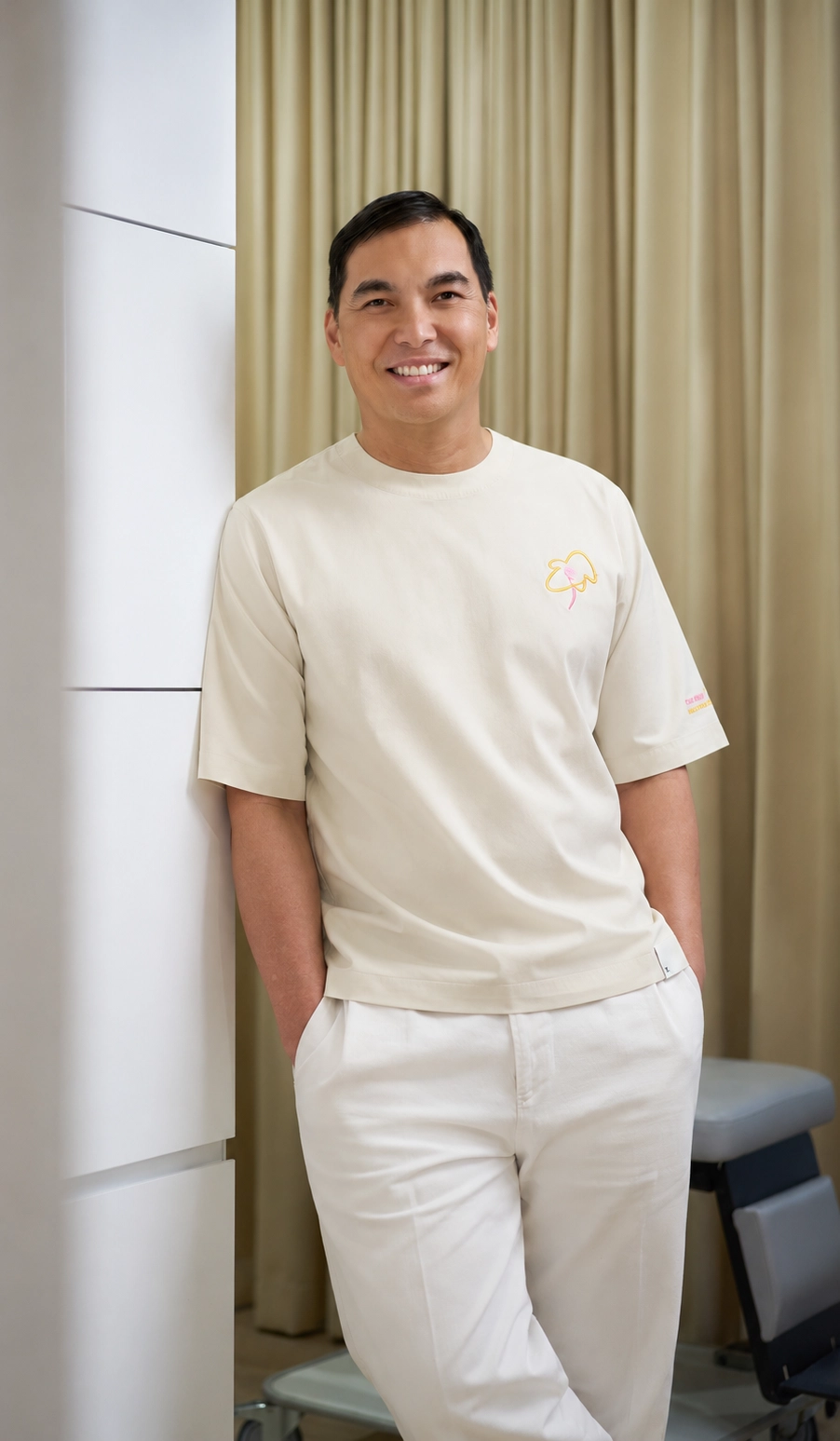
Portrait of Dr. Evan Woo, a plastic and reconstructive breast surgeon in Singapore.
Dr Evan Woo
Senior Consultant Breast and Plastic Surgeon
MBBS (Singapore), MMed (Surgery), MRCS (Edinburgh), FAMS (Plastic Surgery)
Your Guide to Breast Augmentation Surgery
Whether you have always envisioned a fuller silhouette, wish to restore volume after pregnancy or weight loss, or hope to achieve better balance and proportion, breast augmentation offers the opportunity to refine your natural shape in a way that feels uniquely yours.
Rather than simply increasing breast size, breast augmentation is about creating harmony between the breasts and the rest of the body. Every aspect of the procedure, from the choice of implant or fat transfer to the final shape and projection, is carefully considered to achieve an elegant, natural-looking result that complements your figure.
Understanding Breast Augmentation

What is Breast Augmentation?

Breast augmentation is a cosmetic breast procedure that enhances the size, shape and overall proportions of the breasts. Depending on your individual goals, it may be performed to increase naturally small breasts, restore volume lost following pregnancy, breastfeeding or weight changes, improve breast symmetry or create a more balanced silhouette.

Rather than following a one-size-fits-all approach, breast augmentation is carefully tailored to your anatomy and desired outcome. Different surgical techniques are available, each offering distinct advantages depending on the degree of enhancement you are seeking, your existing breast tissue and your body proportions.
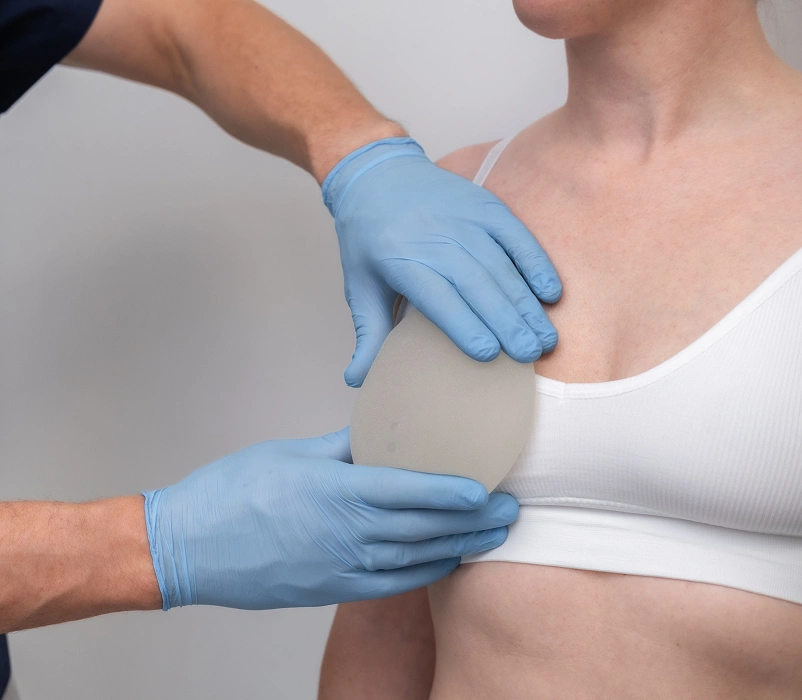
A plastic surgeon in blue medical gloves positioning a textured silicone implant against a patient wearing a white top during a reconstruction consultation.
Potential Benefits & Outcomes

What Are the Benefits of Breast Augmentation?

Breast augmentation can enhance the size, shape and overall proportions of the breasts while addressing concerns such as volume loss or asymmetry. Depending on your anatomy and aesthetic goals, the procedure may help to:

Increase Breast Volume

Enhance breast size to create a fuller appearance that complements your body proportions.

Improve Breast Shape and Projection

Refine breast contour and projection to create a more balanced, natural-looking breast shape.

Correct Asymmetry

Improve differences in breast size, shape or volume to create a more balanced appearance.

Restore Post-Pregnancy Volume

Replace volume lost following pregnancy, breastfeeding or significant weight changes to restore breast fullness.

Improve Body Proportions

Create a breast contour that is more proportionate to your overall body shape and frame.

Refine Overall Silhouette

Enhance the balance between your breasts and body to achieve a more harmonious overall silhouette.
Understanding Your Suitability

Is Breast Augmentation Suitable for Me?
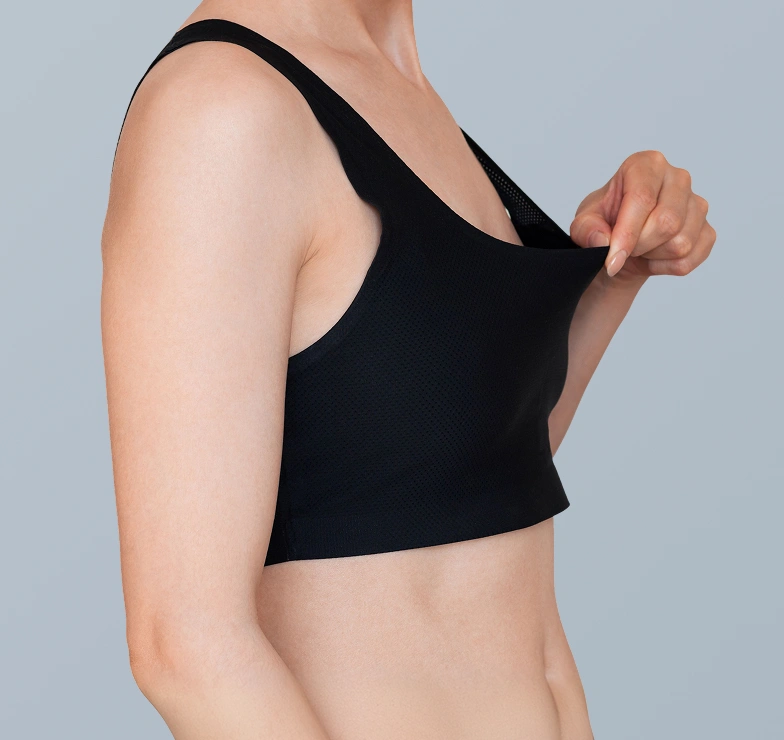
The suitability of breast augmentation depends on factors such as your breast anatomy, overall health and aesthetic goals.
You may be a suitable candidate if you:
  • Wish to increase naturally small breasts.
  • Have experienced breast volume loss following pregnancy, breastfeeding or significant weight loss.
  • Are concerned about differences in breast size, shape or symmetry.
  • Would like to improve the overall proportions of your breasts in relation to your body.
  • Are in good general health and have realistic expectations of what breast augmentation can achieve.
A consultation with Dr Evan Woo provides the opportunity to discuss your goals, assess your anatomy and determine whether breast augmentation is the right option for you.
Side profile of a woman wearing a supportive black surgical crop top following breast surgery recovery.
Choosing Your Implants

What Are the Types of Breast Augmentation?

Breast augmentation is most commonly performed using breast implants, which allow the size, shape and projection of the breasts to be tailored to your anatomy and aesthetic goals.

Breast Implants

Breast implants are suitable for women seeking a moderate to significant increase in breast volume, greater projection or a change in breast shape.

Silicone implants are available in different sizes, shapes and profiles, allowing the procedure to be personalised to your body proportions and desired outcome. Implant placement, incision location and surgical technique are also carefully planned to achieve a balanced, natural-looking result.

What About Fat Grafting?

For selected women seeking a more subtle enhancement without implants, fat grafting may be considered. This involves transferring fat from another area of the body to the breasts to add volume or refine their shape. As some transferred fat is naturally reabsorbed, more than one procedure may sometimes be required.

Fat grafting may also be used alongside breast implants to refine contours, improve tissue coverage or address subtle asymmetries.
Tailored Treatment Options

A More Personalised Approach to Breast Augmentation with Motiva®

Dr Woo offers breast augmentation using Motiva® implants, which incorporate technologies designed to support natural-looking results and different aesthetic goals. The choice of implant is personalised according to factors such as your breast anatomy, tissue characteristics, desired volume and preferred breast shape.

Motiva Joy®

Motiva Joy® is an implant option for women seeking breast enhancement with greater volume and projection. Implant selection is tailored to the individual, taking into account breast dimensions, existing tissue and the desired aesthetic outcome.

Motiva Preserve®

Motiva Preserve® is a tissue-preserving approach to breast augmentation designed to minimise disruption to breast tissues during implant placement. Rather than referring to a specific type of implant, Preserve® describes a surgical approach that focuses on preserving the natural structures of the breast while creating the planned enhancement.
Breast Implant Selection

How Is the Right Breast Implant Selected?

Breast implants differ in their material, shape and profile, all of which can influence how the breasts look and feel after augmentation. Dr Woo considers these characteristics alongside your anatomy, existing breast tissue and aesthetic goals when recommending an implant.

Implant Material

Breast implants typically consist of an outer silicone shell filled with silicone gel or saline. The filling material can influence factors such as the feel, behaviour and appearance of the implant.
Silicone implants
Silicone implants are filled with silicone gel and are commonly chosen for their soft, natural feel.
Saline implants
Saline implants are filled with sterile saline solution and may feel firmer or be more prone to visible rippling, particularly in women with less natural breast tissue.
The types of implants available and their suitability depend on your anatomy, preferences and the surgical approach recommended by Dr Woo.

Implant Shape

Implant shape influences where fullness appears across the breast and the overall breast contour.
Round implants
Round implants provide fullness throughout the breast and can create greater upper-pole fullness, depending on the implant selected and your anatomy.
Anatomical or teardrop implants
Anatomical or teardrop implants have greater fullness towards the lower portion of the implant, creating a more gradual breast slope.

Implant Profile

Implant profile influences how far the breast projects from the chest in relation to the width of the implant.
Lower-profile implants
Lower-profile implants have a broader base with less forward projection, creating a wider breast contour.
Higher-profile implants
Higher-profile implants have a narrower base with greater forward projection, creating a more projected breast contour.
The final implant is selected by considering its material, dimensions, shape and profile together, rather than any one characteristic in isolation.
Understanding Incision Location

Where Will Your Breast Augmentation Scars Be?

Breast augmentation requires an incision to insert and position the implant, which means some scarring is unavoidable. However, the location of the incision can influence where the scar sits and how noticeable it may be once healed. Where possible, incisions are positioned within natural folds or transitions of the body to make the resulting scar less conspicuous.

Inframammary Incision (Scar Beneath the Breast)

The incision is placed within the natural crease beneath the breast. Once healed, the scar is generally positioned where the breast meets the chest and may be concealed by the breast itself.

This approach may appeal to women who prefer the scar to be away from the more visible central area of the breast.

Periareolar Incision (Scar Around the Areola)

The incision is made along the border between the areola and the surrounding breast skin. This positions the scar at a natural transition in skin colour, which may help make it less conspicuous as it matures.

The suitability of this approach depends on factors such as your anatomy, the planned procedure and whether other breast surgery is being performed.

Transaxillary Incision (No Scar on the Breast)

The incision is made within the armpit rather than directly on the breast. Its main aesthetic advantage is that there is no surgical scar on the breast itself, although a scar remains within the armpit.

This may be an option for selected women who place particular importance on avoiding an incision on the breast. Suitability depends on the implant and surgical approach being considered.
The most appropriate incision depends on your anatomy, implant choice and surgical approach, as well as where you would prefer the scar to be located.
Understanding Implant Placement

How Does Implant Placement Affect Your Breast Augmentation?

Where an implant is positioned is another important part of breast augmentation planning. Depending on your anatomy and surgical plan, an implant may be placed beneath the breast tissue or partially or fully beneath the chest muscle.

Subglandular Placement

The implant is positioned beneath the breast tissue and above the chest muscle. Suitability depends in part on whether there is sufficient natural tissue to provide appropriate implant coverage.

Submuscular or Dual-Plane Placement

The implant is positioned partly or more extensively beneath the chest muscle. A dual-plane approach combines elements of submuscular and subglandular placement to allow the implant and breast tissue to be positioned according to the patient’s anatomy and desired breast shape.
The appropriate implant position depends on factors including your existing breast tissue, skin quality, implant characteristics and desired outcome.
Dr Evan Woo Logo
Plan a Breast Augmentation That Complements Your Body
From implant shape and projection to incision and placement, every decision can influence how your breasts look and feel after augmentation. Discuss your goals with Dr Evan Woo and develop a surgical plan personalised to you.
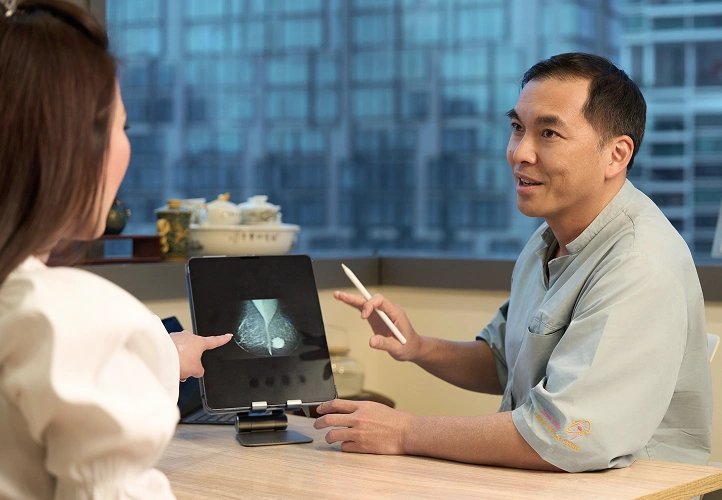
Dr. Evan Woo explaining mammogram scan results on a tablet to a female patient during a consultation.
Pre-Surgery Preparation

Preparing for Breast Augmentation

Careful planning helps ensure your breast augmentation is tailored to your anatomy and aesthetic goals. Before surgery, you can generally expect the following:

Consultation and Assessment

Dr Evan Woo will assess your breast anatomy, skin quality, body proportions and treatment goals before recommending the most appropriate augmentation approach.

Treatment Planning

You will discuss your implant or fat grafting options, expected outcomes and the recovery process to develop a personalised surgical plan.

Preparing for Surgery

You will receive personalised instructions on medications, smoking cessation, fasting requirements and arranging support after your procedure.
Your consultation is an opportunity to discuss any questions or concerns so that you feel informed and prepared before surgery.
What to Expect

What Happens During Breast Augmentation?

Breast augmentation with implants is performed under general anaesthesia and planned according to your anatomy, chosen implant and desired breast appearance. While the surgical approach varies between patients, the procedure generally involves the following steps:
Anaesthesia
General anaesthesia is administered so you remain asleep and comfortable throughout the procedure.
Incision
The planned incision is made in the agreed location to provide access for implant placement.
Pocket Creation
A pocket is carefully created above or beneath the chest muscle, depending on the implant placement selected for you.
Implant Placement
The selected implants are inserted and positioned to achieve the planned breast volume, shape and symmetry.
Closure
The incisions are closed with sutures and dressings are applied. A supportive surgical bra may be fitted before you are transferred to recovery.
After the Procedure
Following surgery, you will be monitored before discharge and receive personalised aftercare instructions and follow-up arrangements. Most breast augmentation procedures are performed as day surgery, although an overnight stay may occasionally be recommended.
Dr Evan Woo Logo
Take the Next Step Towards Your Ideal Silhouette
Breast augmentation is a highly personalised procedure. Meet with Dr Evan Woo to discuss your goals, understand your options and develop a treatment plan tailored to you.
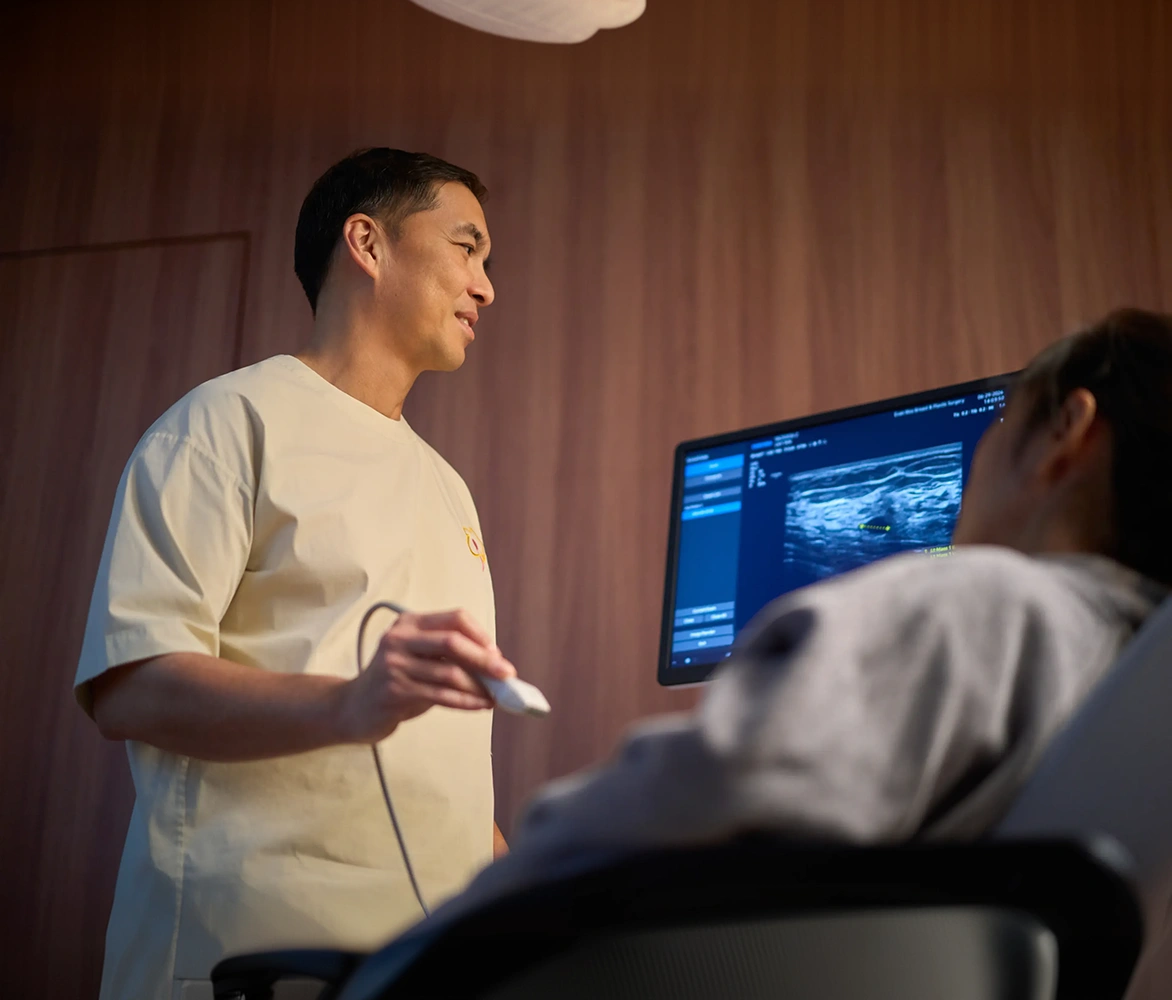
Dr. Evan Woo performing a breast ultrasound scan for a patient during a clinic consultation
Post-Surgery Recovery

Recovery After Breast Augmentation

Recovery after breast augmentation is gradual, with most patients returning to light daily activities within one to two weeks. The breasts will continue to settle and change as healing progresses.
Initial Recovery
Temporary swelling, bruising, tightness and discomfort may occur after surgery. Most patients can resume light daily activities within one to two weeks, while strenuous exercise and heavy lifting should be avoided until advised by your surgeon.
Aftercare Recommendations
Wear your prescribed supportive surgical bra, care for your incisions as instructed and attend scheduled follow-up appointments to support healing and monitor your recovery.
Final Results
As swelling subsides, the implants gradually settle into position and the breast shape and contour become more apparent over the following weeks to months.
Understanding the Risks

Risks and Potential Complications of Breast Augmentation
As with any surgery, breast augmentation carries potential risks, including bleeding, infection, scarring, changes in nipple or breast sensation, breast asymmetry and the possibility of revision surgery.
Additional risks include:
  • Capsular contracture
  • Implant rupture
  • Implant malposition
During your consultation, Dr Evan Woo will assess your individual risk factors, discuss the potential risks and complications, and explain how these considerations may influence your surgical plan.
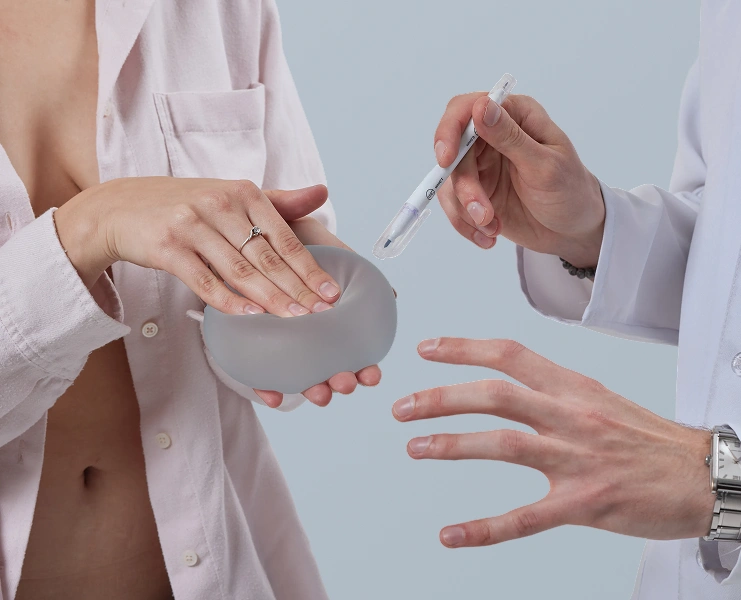
A surgeon holding a surgical marker while a patient examines a silicone breast implant during a reconstructive surgery consultation.
Trusted Breast Screening Expertise

Why Patients Choose
Dr Evan Woo for Breast Augmentation

Tick icon

Dedicated Breast Surgery Practice

Dr Evan Woo's practice is dedicated to breast surgery, encompassing cosmetic breast augmentation, breast reconstruction and breast cancer surgery for comprehensive, focused breast care.
Tick icon

Fellowship-Trained Breast Surgeon

Following specialist training in Singapore, Dr Woo completed a Microsurgery Fellowship at the Nottingham Breast Institute, strengthening his expertise in breast reconstruction and complex breast surgery.
Tick icon

A Pioneer in Motiva® Breast Implant Technology

Dr Woo is one of the first five certified Motiva providers in Singapore, offering patients access to a tissue-preserving approach that supports aesthetic enhancement with minimal disruption to natural breast structures.
Tick icon

Cosmetic and Reconstructive Expertise

Experience across aesthetic breast surgery, breast reconstruction and breast cancer surgery allows Dr Woo to plan breast augmentation with a reconstructive perspective that prioritises proportion and long-term outcomes.
Every Journey is Different

How Breast Augmentation
Fits Different Patient Journeys

Breast augmentation is performed for a variety of reasons, and the procedure can be tailored to different life stages and aesthetic goals. While many women choose breast augmentation to enhance naturally smaller breasts, it may also play a role in restoring breast shape and volume following pregnancy or breast cancer treatment.

After Pregnancy and Breastfeeding

Pregnancy and breastfeeding can lead to changes in breast volume, shape and firmness. Breast augmentation may help restore fullness, while some women choose to combine it with a breast lift as part of a mummy makeover to address both volume loss and breast sagging. Additional body contouring procedures may also be performed during a mummy makeover, depending on individual goals.

As Part of Breast Cancer Reconstruction

Breast implants may also be used in implant-based breast reconstruction following a mastectomy or to improve breast symmetry after breast-conserving surgery or previous reconstruction. The most appropriate approach depends on factors such as the type of breast cancer surgery, planned cancer treatments and your individual anatomy.
Your Journey Starts Here

Achieve Fuller, More Balanced Breasts with Dr Evan Woo

Whether you are looking to enhance your natural curves, achieve better body proportions or restore breast volume, breast augmentation can help you feel more confident in your appearance. Every woman’s anatomy, lifestyle and aesthetic goals are unique, making personalised planning an essential part of the journey.
At Evan Woo Plastic Surgery, breast augmentation is tailored to your anatomy, lifestyle and aesthetic goals to create results that look balanced and feel natural. From selecting the right implant to planning your procedure and supporting your recovery, Dr Evan Woo provides personalised care at every stage. Schedule a consultation to explore your options and take the first step towards achieving the look you envision.
Helpful Information

FAQs About Breast Augmentation

Should I choose breast implants or fat grafting?

The most suitable option depends on your anatomy, aesthetic goals and the degree of enhancement you want. Breast implants generally provide greater volume and projection, while fat transfer offers a subtler increase using your own tissue. In some cases, combining both techniques may be recommended.

How long do breast augmentation results last?

Breast implants are designed to be durable but are not lifetime devices and may eventually require replacement. With fat transfer, the surviving fat generally remains long term, although ageing, pregnancy and weight changes may continue to affect breast appearance.

Will my breast augmentation results look natural?

Natural-looking results depend on factors such as your anatomy, the amount of enhancement, implant selection or fat transfer technique, and surgical planning. The goal is to create breasts that complement your body proportions rather than simply increasing breast size.

Can I breastfeed after breast augmentation?

Many women are able to breastfeed after breast augmentation, although this depends on factors such as the surgical technique used and individual breast anatomy. If you plan to have children in the future, discuss this during your consultation before surgery.

Will breast augmentation leave visible scars?

Breast augmentation requires incisions, so some scarring is unavoidable. Incisions are placed in discreet locations where possible, and scars generally become less noticeable as they mature, although they do not disappear completely.

When can I return to work and exercise after breast augmentation?

Most patients can return to desk-based work within one to two weeks. Strenuous exercise, heavy lifting and upper-body workouts should be avoided until your surgeon advises it is safe, as recovery varies depending on the procedure performed.
Experience You Can Rely On
Our Breast Augmentation Surgeon
Dr Evan Woo
Senior Consultant Breast and Plastic Surgeon
  • Bachelor of Medicine, Bachelor of Surgery, National University of Singapore
  • Master of Medicine (Surgery), National University of Singapore
  • Member of the Royal College of Surgeons of Edinburgh
  • Fellow, Academy of Medicine, Singapore (Plastic Surgery)
Dr Evan Woo is a specialist plastic, reconstructive and breast surgeon whose practice is dedicated exclusively to breast surgery, encompassing aesthetic breast surgery, breast reconstruction and breast cancer surgery. Following specialist training in Singapore, he completed a Microsurgery Fellowship at the Nottingham Breast Institute in the United Kingdom, further advancing his expertise in reconstructive and complex breast surgery.
Drawing on experience across cosmetic, reconstructive and oncological breast surgery, Dr Woo approaches every breast augmentation with careful consideration of breast proportions, tissue characteristics and each patient’s aesthetic goals. Whether using breast implants, fat transfer or a combination of both techniques, every treatment plan is designed to achieve balanced, natural-looking results while preserving long-term breast health.
More About Dr Evan Woo
Inspiring the
Confidence to be
Yourself.
Begin with a consultation shaped by dedicated breast expertise, meticulous planning and a commitment to achieving the best possible outcome.
Prefer
WhatsApp?
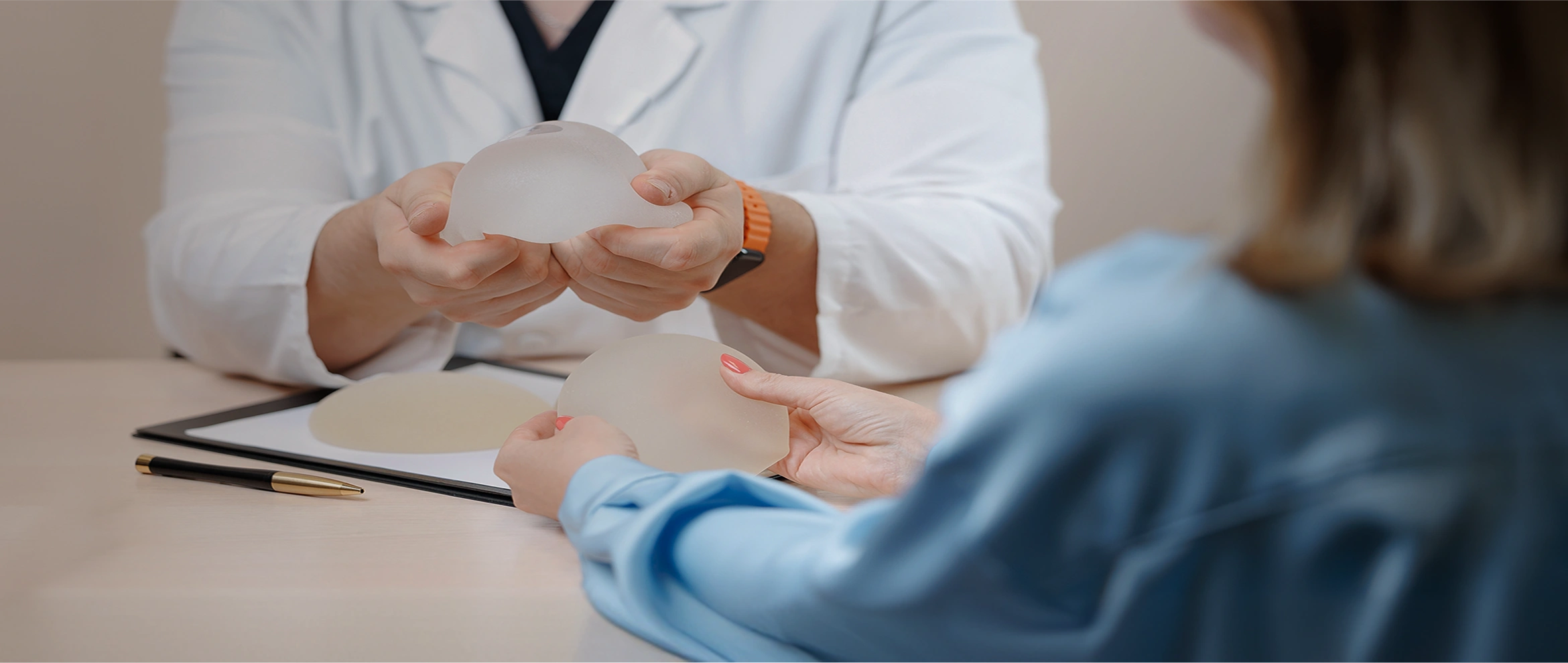
Dr Evan Woo holding silicone breast implants during a consultation with a patient in Singapore
Book a consultation
Dr. Evan Woo Profile Picture
Dr Evan Woo
Senior Consultant Breast and Plastic Surgeon