

Portrait of Dr. Evan Woo, a plastic and reconstructive breast surgeon in Singapore.
Dr Evan Woo
Senior Consultant Breast and Plastic Surgeon
MBBS (Singapore), MMed (Surgery), MRCS (Edinburgh), FAMS (Plastic Surgery)
Your Guide to Breast Cancer Screening
Early detection begins with the right screening strategy. Whether you are attending routine screening, have a family history of breast cancer or require closer surveillance because of an increased risk, breast cancer screening plays an important role in identifying abnormalities before symptoms develop.
Because every woman’s risk profile is different, screening recommendations should be tailored to the individual. Understanding when to start screening, which investigations are appropriate and what your results mean allows you to make informed decisions about your breast health.
Breast Health & Early Detection

What Is Breast Cancer Screening?

The aim of breast cancer screening is to detect abnormalities before they become noticeable, when treatment is often simpler and more effective. Screening recommendations are not the same for every woman and should take into account factors such as age, family history, breast density and overall risk.

The most appropriate screening method depends on factors such as your age, personal risk factors, family history and breast density. Mammography is the primary screening test for most women, while some individuals at higher risk or with denser breast tissue may benefit from additional imaging, such as breast ultrasound or magnetic resonance imaging (MRI).

Breast cancer screening is intended for individuals without symptoms. If you notice a new breast lump, nipple discharge, changes in breast shape, skin dimpling or other concerning symptoms, you should seek prompt medical evaluation rather than wait for your next routine screening appointment.
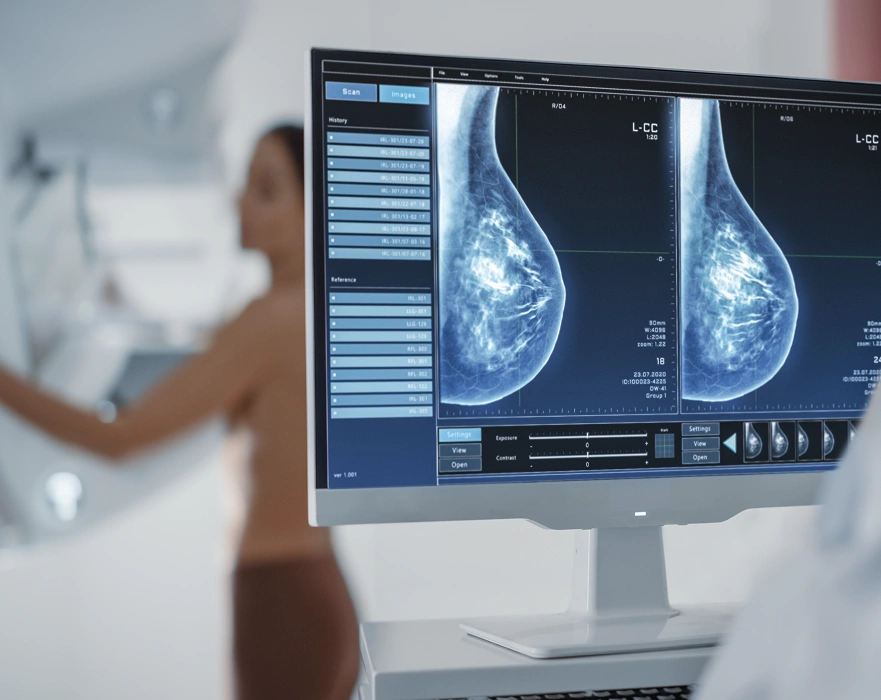
Computer screen displaying digital mammogram x-ray scans of breasts during a screening procedure.
Breast Cancer Screening Guidelines

When Should You Start Regular Breast Cancer Screening?

The appropriate age to begin breast cancer screening depends on your individual risk of developing breast cancer. While many women can follow routine screening recommendations, those with certain risk factors may benefit from starting screening earlier or undergoing additional investigations.

Women at Average Risk

Women without significant risk factors can generally follow Singapore's national breast cancer screening recommendations. Routine mammography is recommended for women aged 50 to 74 years every two years. Women aged 40 to 49 years may also consider screening after discussing the potential benefits and limitations with their doctor, as screening decisions should take into account individual preferences and risk factors.

Women at Higher Risk

Some women have a higher-than-average risk of developing breast cancer and may benefit from starting screening at an earlier age or undergoing more frequent screening. Risk factors include a strong family history of breast cancer, inherited genetic mutations such as BRCA1 or BRCA2, a personal history of breast cancer or certain high-risk breast conditions, and previous chest radiation therapy at a young age.
For women at higher risk, screening recommendations often differ from those for the general population. Depending on your individual risk profile, your breast surgeon may recommend earlier mammography, additional imaging such as breast ultrasound or breast MRI, or a combination of screening modalities. A personalised risk assessment helps ensure that screening is tailored to your needs while avoiding unnecessary investigations.
Dr Evan Woo Logo
Not Sure When to Start Breast Cancer Screening?
Dr Evan Woo provides individualised risk assessment and screening recommendations, helping you understand which investigations are appropriate and when they should be performed.
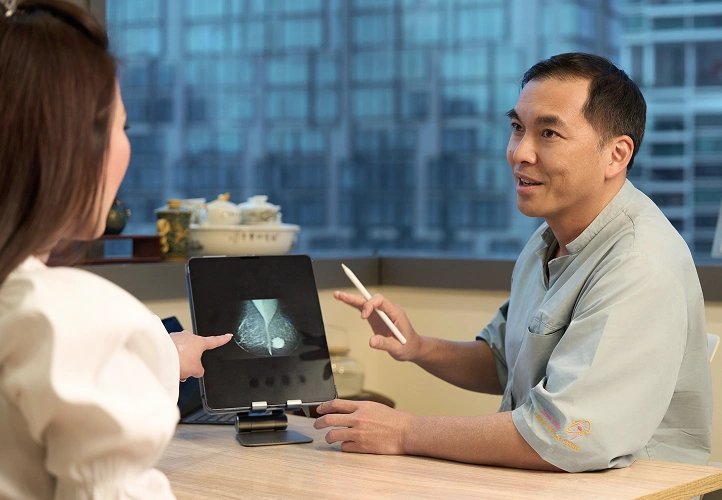
Dr. Evan Woo explaining mammogram scan results on a tablet to a female patient during a consultation.
Breast Cancer Screening Methods

What Tests May Be Used for Breast Cancer Screening?

Several tests may be used to screen for breast cancer, depending on your age, individual risk factors, breast density and whether you have any symptoms.

Mammogram

A mammogram is the primary screening test for breast cancer and remains the cornerstone of routine screening for women at average risk. It can detect small abnormalities, including early breast cancers and tiny calcifications, before they become large enough to be felt. Detecting these changes early may allow for more treatment options and improved outcomes.

Breast Ultrasound

Breast ultrasound is commonly used alongside mammography when additional assessment is needed. It is particularly useful for evaluating women with dense breast tissue or investigating a specific area of concern identified during screening. Ultrasound can also help distinguish between fluid-filled cysts and solid breast masses.

Breast MRI

Breast MRI provides highly detailed images of the breast and is generally reserved for women at higher risk of breast cancer or when additional evaluation is required following other imaging tests. It may also be recommended for selected patients based on their personal or family history.

Clinical Breast Examination

A clinical breast examination is a physical examination of the breasts performed by a doctor. During the examination, your doctor assesses both breasts and the underarm area for lumps or other changes that may require further investigation. A clinical breast examination is often performed as part of a comprehensive breast assessment, particularly when evaluating women with symptoms, a family history of breast cancer or other risk factors.
If an abnormality is detected, further investigations such as an ultrasound-guided core biopsy or fine-needle aspiration (FNA) may be recommended to establish a diagnosis.
Your Screening Appointment

What Happens During a Breast Cancer Screening Appointment?

A breast cancer screening appointment is designed to assess your individual risk and determine the most appropriate screening strategy for you. Every screening consultation begins with an assessment of your individual risk factors, allowing Dr Woo to recommend the most appropriate screening strategy for your circumstances.

Medical History and Risk Assessment

Your appointment begins with a discussion about your medical history, family history of breast or ovarian cancer, previous breast conditions and any current breast concerns. This allows your breast surgeon to determine your level of risk and tailor your screening plan accordingly.

Clinical Breast Assessment

If appropriate, your breast surgeon may perform a clinical breast examination to assess for any lumps, skin changes, nipple abnormalities or enlarged lymph nodes. The examination also helps determine whether additional investigations are needed.

Breast Imaging

Based on your age, risk profile and clinical findings, your breast surgeon will recommend the most appropriate imaging investigations, which may include a mammogram, breast ultrasound or breast MRI. Some women require only routine screening, while others may benefit from additional imaging to provide a more complete assessment.
Dr Evan Woo Logo
A Clearer Understanding of Your Breast Health Starts Here
Whether you are attending routine screening or require further assessment, Dr Evan Woo provides comprehensive evaluation and guidance to help you understand your breast health with clarity and confidence.
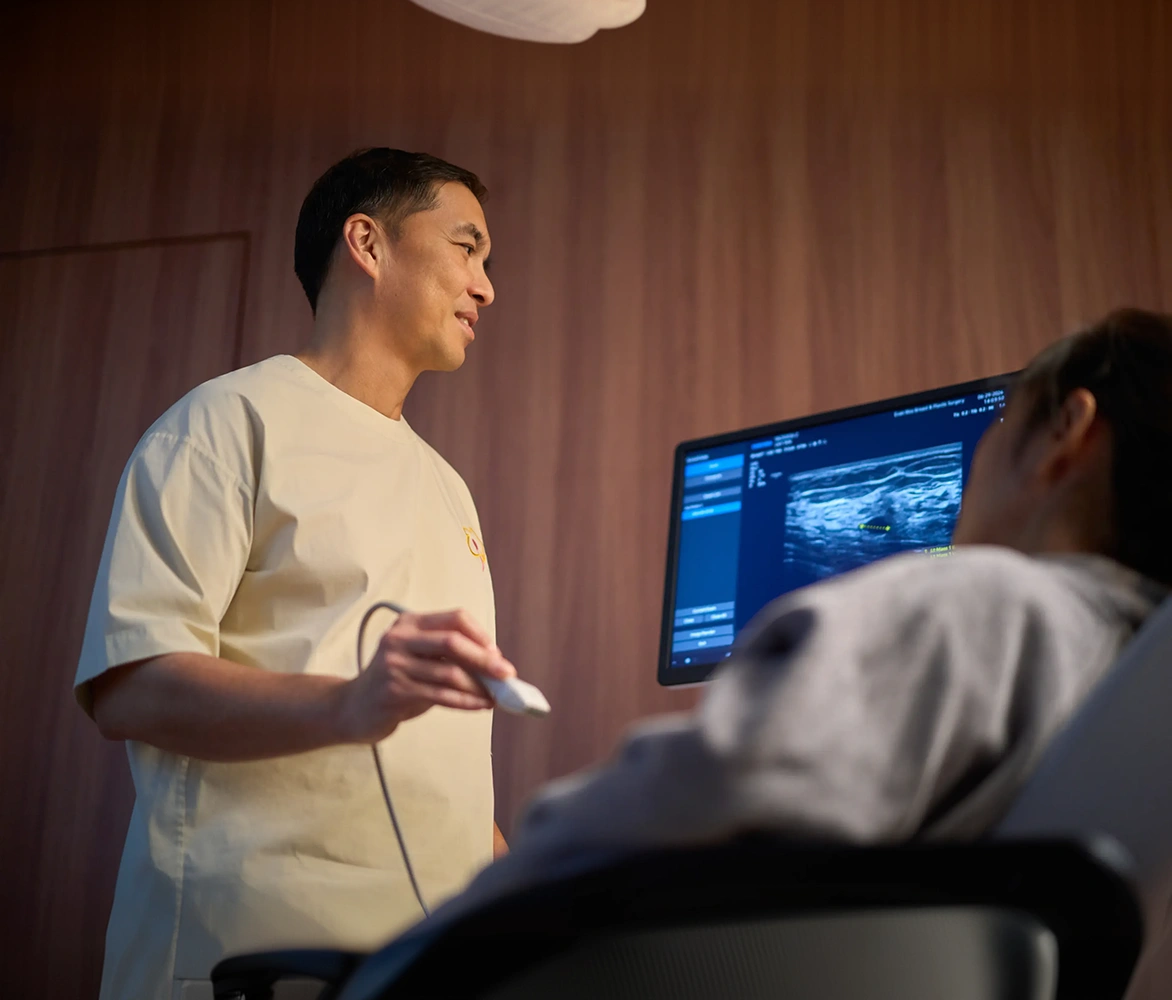
Dr. Evan Woo performing a breast ultrasound scan for a patient during a clinic consultation
Understanding Your Screening Results

What Happens If Your Breast Cancer Screening Finds Something Abnormal?

Being recalled for further assessment after breast cancer screening is relatively common and does not necessarily mean you have breast cancer. Many abnormalities detected during screening are ultimately found to be benign (non-cancerous). However, further assessment is important to determine the cause and guide the next steps.

Depending on the findings, your breast surgeon may recommend one or more of the following investigations:

Additional Mammographic Views
To obtain clearer images of a specific area of the breast.
Breast Ultrasound
To further evaluate abnormalities detected on a mammogram or assess palpable breast lumps.
Breast MRI
In selected cases where more detailed imaging is required.
Ultrasound-Guided Core Biopsy
To obtain a tissue sample from a suspicious breast abnormality for laboratory analysis.
Fine-Needle Aspiration (FNA)
To collect cells or fluid from selected breast lumps or lymph nodes for further evaluation.

After reviewing the results, Dr Evan Woo will explain the findings and discuss the next steps. If breast cancer is diagnosed and surgery is recommended, hookwire or radio-guided occult lesion localisation (ROLL) may be performed before the operation to accurately identify abnormalities that cannot be easily felt, helping guide their surgical removal.

Where appropriate, treatment planning may include breast-conserving surgery or mastectomy, together with breast reconstruction where suitable. As both a breast and plastic surgeon, Dr Woo is able to consider reconstructive options from the outset, including nipple-sparing techniques and nipple sensation preservation for selected patients, allowing treatment to be planned as a coordinated whole.

Trusted Breast Screening Expertise

Why Patients Choose
Dr Evan Woo for Breast Cancer Screening

Tick icon

Specialist Breast Assessment

Beyond recommending screening investigations, Dr Woo considers your age, family history, breast density and individual risk factors to develop a screening strategy tailored to your needs.
Tick icon

More Than Early Detection

If an abnormality is identified, assessment does not stop at the imaging findings. Dr Woo evaluates the results in the context of your overall breast health, helping you understand what they mean and what should happen next.
Tick icon

Prepared for Every Outcome

Should further investigation or treatment be required, your care can continue seamlessly under the same surgeon. From diagnostic assessment to breast cancer treatment and reconstruction where appropriate, every stage can be planned within a single practice.
Tick icon

Continuity Under One Surgeon

Whether you require routine screening, evaluation of an abnormal result or treatment for breast cancer, patients benefit from continuity under the same surgeon, with every decision guided by a thorough understanding of their history and individual circumstances.
Your Breast Health Journey

Expert Guidance at Every Stage of Breast Care with Dr Evan Woo

Breast cancer screening is more than undergoing routine imaging. It involves assessing your individual risk, recommending the most appropriate screening strategy and ensuring that any abnormal findings are evaluated promptly and thoroughly. Whether you are attending your first screening, have a family history of breast cancer or require further assessment after an abnormal screening result, receiving specialist care can help you navigate the process with greater clarity and confidence.
At Evan Woo Plastic Surgery, patients benefit from comprehensive breast care that extends beyond screening and diagnosis. If further investigation or treatment is required, Dr Evan Woo provides coordinated care that extends beyond diagnosis, helping patients navigate the next steps with clarity and continuity. Schedule an appointment with Dr Woo to discuss your breast health and screening needs.
Helpful Information

FAQs About Breast Cancer Screening

Is breast cancer screening painful?

A mammogram may cause temporary discomfort because the breast needs to be compressed to obtain clear images. The compression usually lasts only a few seconds, and most women find the procedure tolerable. If you have concerns about discomfort, let your healthcare provider know before the examination.

Can I have a mammogram if I have breast implants?

Yes. Women with breast implants can still undergo mammography. It is important to inform the radiographer before the examination so that specialised imaging techniques can be used to obtain the best possible views while minimising the risk of implant damage. Depending on your individual circumstances, additional imaging such as breast ultrasound or MRI may also be recommended.

What should I do if I notice a breast lump between screening appointments?

Do not wait for your next routine screening appointment. Arrange to see a doctor or breast surgeon promptly for an assessment. Most breast lumps are not cancerous, but any new lump or other concerning breast changes should be evaluated to determine the cause.

How long does it take to receive breast cancer screening results?

The time taken to receive your results depends on where your screening is performed and whether additional imaging is required. Your doctor will explain when you can expect your results and discuss any recommended next steps if further assessment is needed.

If my screening results are normal, do I still need future breast cancer screening?

Yes. A normal screening result means that no significant abnormalities were detected at the time of the examination, but it does not eliminate your future risk of developing breast cancer. Continuing to attend regular screening based on your age and individual risk factors remains important, and you should seek medical attention promptly if you notice any new breast changes between screening appointments.

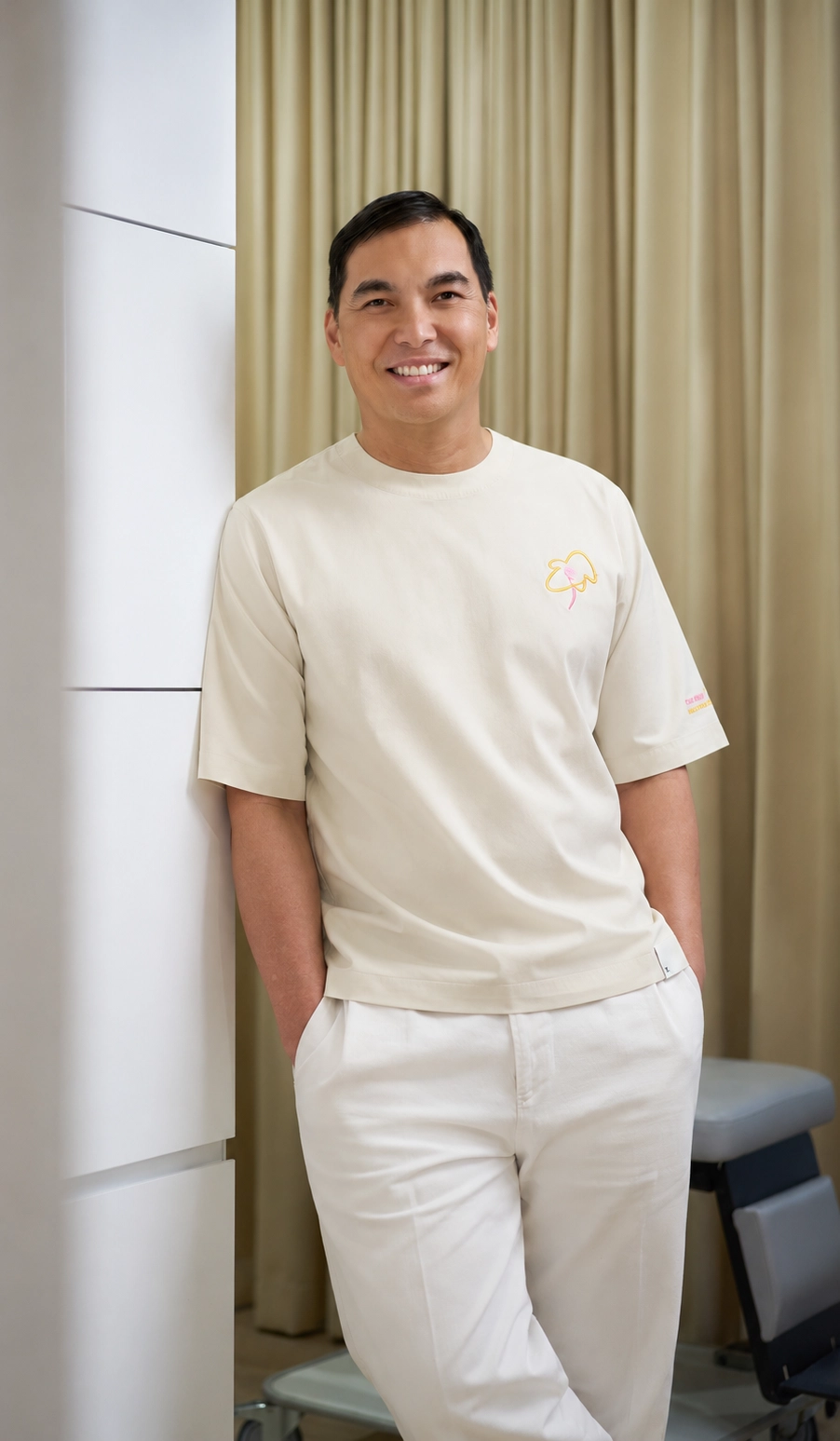
Experience You Can Rely On
Our Breast Cancer Screening Specialist
Dr Evan Woo
Senior Consultant Breast and Plastic Surgeon
  • Bachelor of Medicine, Bachelor of Surgery, National University of Singapore
  • Master of Medicine (Surgery), National University of Singapore
  • Member of the Royal College of Surgeons of Edinburgh
  • Fellow, Academy of Medicine, Singapore (Plastic Surgery)
Dr Evan Woo is a specialist plastic, reconstructive and breast surgeon with a focused practice in breast cancer surgery, breast reconstruction and aesthetic breast surgery. Having completed specialist training in Singapore and a Microsurgery Fellowship at the Nottingham Breast Institute in the United Kingdom, he provides comprehensive breast care spanning breast cancer risk assessment, evaluation of abnormal screening findings, cancer treatment and breast reconstruction, allowing patients to receive coordinated care throughout every stage of their breast health journey.
One of the distinguishing aspects of Dr Woo’s practice is the ability to consider diagnosis, cancer surgery, breast reconstruction and long-term aesthetic outcomes together whenever appropriate. This allows treatment planning to extend beyond the immediate diagnosis, helping patients understand both their current options and future considerations.
More About Dr Evan Woo
Planning for the Best
Outcome Starts Today.
Begin with a consultation shaped by dedicated breast expertise, meticulous planning and a commitment to achieving the best possible outcome.
Prefer
WhatsApp?
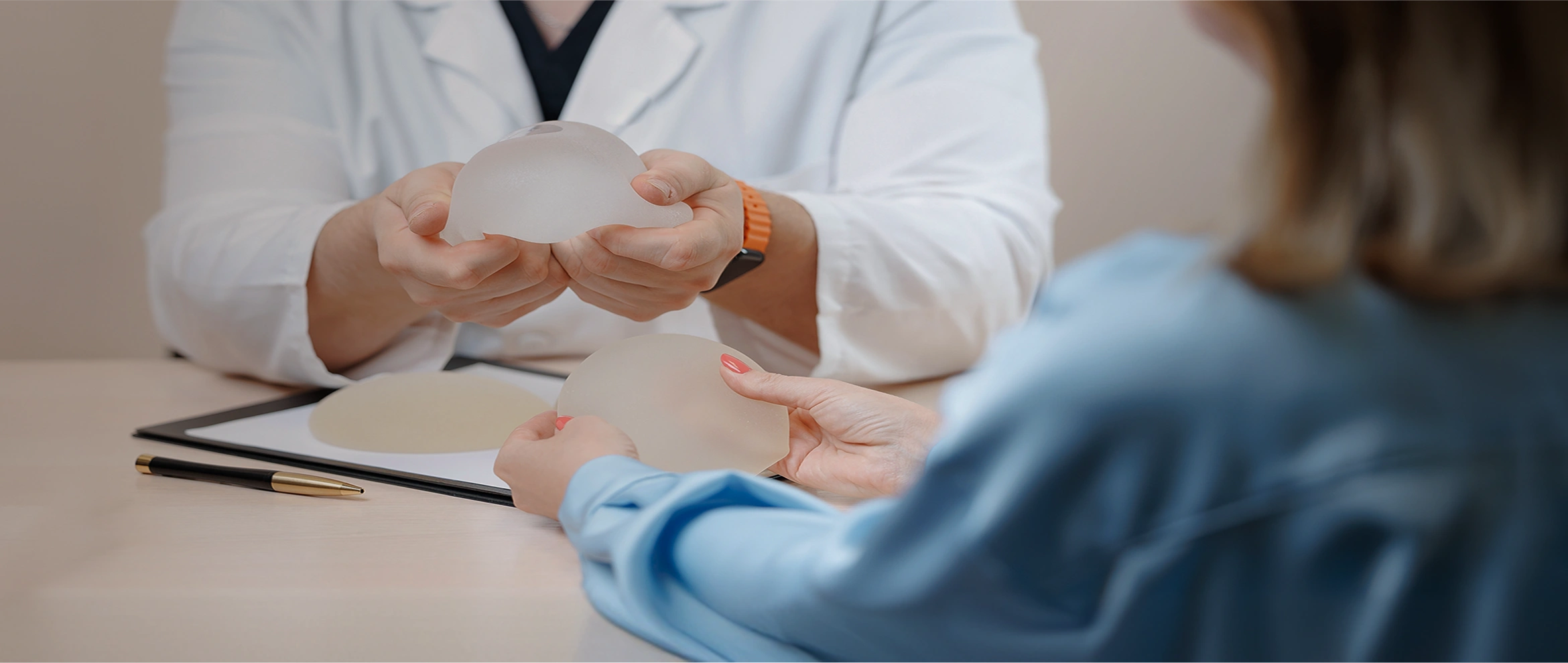
Dr Evan Woo holding silicone breast implants during a consultation with a patient in Singapore
Book a consultation
Dr. Evan Woo Profile Picture
Dr Evan Woo
Senior Consultant Breast and Plastic Surgeon